A Child’s Future Can Begin with a Glass of Clean Water
When discussing children’s future, our attention often focuses on education, nutrition, and access to healthcare. Yet one fundamental necessity forms the foundation of all these aspects: clean water.
Every day, children rely on water for drinking, cooking, bathing, washing their hands, and maintaining personal hygiene. Clean water is an essential part of nearly every daily activity that supports their health and development.
However, water that appears clear is not always safe for use or consumption. Without proper testing and monitoring, many forms of contamination cannot be detected simply by observing its appearance.
This is why protecting water quality is not merely about meeting daily needs—it is about safeguarding the health and future of the next generation.
Clean Water Is the Foundation of Children’s Health
Access to clean water plays a vital role in improving the quality of life, especially for children during their critical years of growth and development.
Water that meets quality standards supports daily activities, promotes proper sanitation, and contributes to preventing illnesses associated with poor water quality and inadequate sanitation.
Conversely, water whose quality is not properly monitored may affect public health and influence children’s learning, productivity, and overall well-being.
For this reason, water quality management has become an essential component of creating healthy and sustainable communities.
Why Should Water Be Tested Regularly?
Many water quality parameters cannot be identified through color, odor, or taste alone.
Water that appears clean may still contain microorganisms, heavy metals, or chemical compounds that can only be detected through laboratory analysis.
Laboratory testing allows various water quality parameters to be evaluated, including:
Microbiological Parameters
- Escherichia coli (E. coli)
- Total Coliform
These parameters help identify microbiological contamination that may affect water quality.
Physical Parameters
- pH
- Turbidity
- Color
- Total Dissolved Solids (TDS)
Physical parameters provide an overview of the fundamental characteristics of water quality.
Chemical Parameters
- Nitrate
- Nitrite
- Ammonia
- Iron (Fe)
- Manganese (Mn)
- Hardness
- Chloride
Heavy Metal Parameters
- Lead (Pb)
- Mercury (Hg)
- Cadmium (Cd)
- Arsenic (As)
Testing these parameters helps ensure that water quality complies with applicable standards and regulatory requirements.
Water Quality Monitoring Supports Better Water Management
In addition to laboratory testing, regular water quality monitoring is a crucial part of sustainable water resource management.
Continuous monitoring enables changes in water quality to be detected early, allowing corrective actions to be implemented whenever necessary.
This approach supports a wide range of sectors—including schools, hospitals, residential areas, industrial facilities, and public infrastructure—in maintaining water quality over time.
With accurate and reliable data, organizations can make informed decisions based on measurable evidence rather than assumptions.
SUCOFINDO’s Role in Safeguarding Water Quality
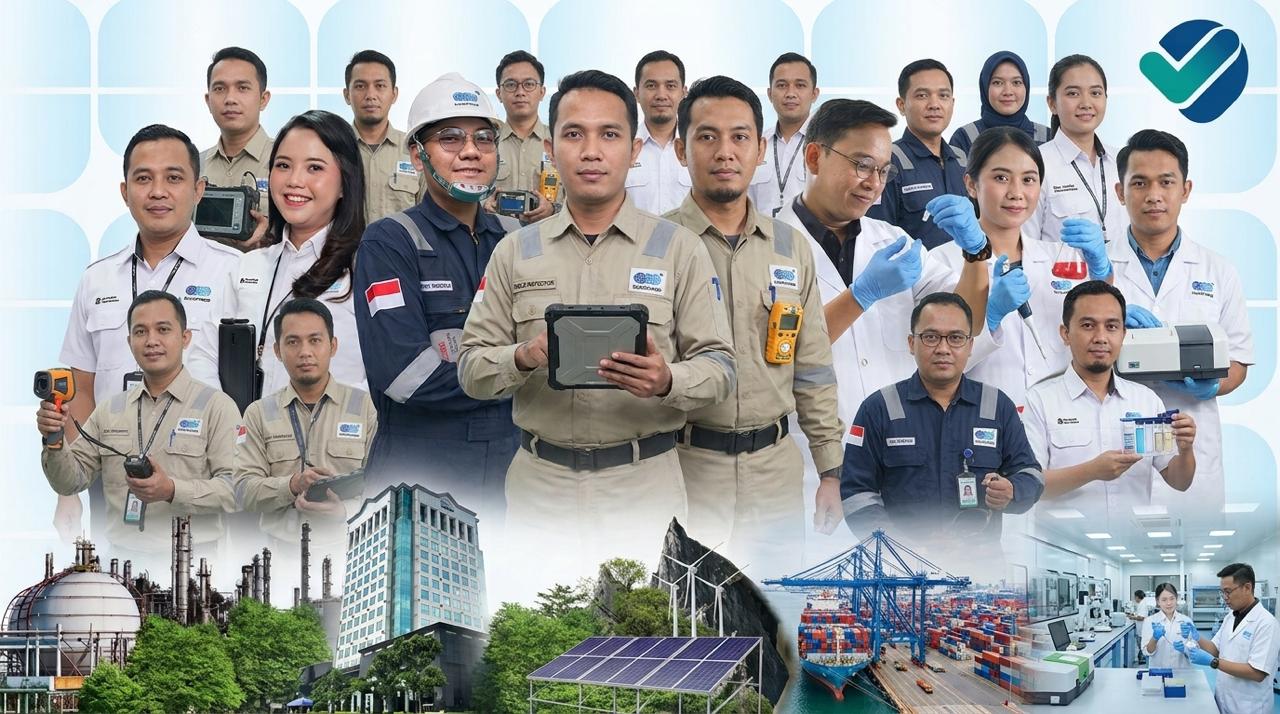
As a Testing, Inspection, Certification, and Consulting (TICC) company, SUCOFINDO supports industries, institutions, and public facilities in ensuring water quality through laboratory testing, environmental monitoring, inspection, and consulting services.
This integrated approach enables organizations to better understand water quality conditions while supporting compliance with applicable regulations and standards.
SUCOFINDO Services Supporting Water Quality
- Clean Water Laboratory Testing
Conducting laboratory analysis of physical, chemical, microbiological, and heavy metal parameters to verify that water quality complies with applicable standards.
- Water Quality Testing for Public Facilities
Providing water quality testing services for schools, hospitals, public facilities, residential communities, and other public service areas to ensure water is suitable for its intended use.
- Water Quality and Sanitation Monitoring
Performing routine monitoring through sampling, laboratory analysis, and evaluation of water quality results to support more effective environmental and sanitation management.
- Drinking Water and Groundwater Testing
Conducting comprehensive testing of drinking water and groundwater to assess their quality characteristics and determine compliance with required quality parameters.
A Child’s Future Begins with the Essentials
Building Indonesia’s Golden Generation does not always begin with grand initiatives.
More often, it begins with the basic necessities that people depend on every day—including clean water.
Every drop of quality water not only supports public health today but also serves as a long-term investment in the growth, development, and future of Indonesia’s children.
Through its Testing, Inspection, Certification, and Consulting (TICC) services, SUCOFINDO is committed to supporting reliable, measurable, and sustainable water quality management as part of creating healthier environments for Indonesia’s Golden Generation.