Entering the European Market Starts with Food Safety Compliance
As consumer awareness of food safety continues to grow, countries around the world are implementing increasingly stringent regulations to protect public health. The European Union (EU) is recognized for having one of the world’s most rigorous food safety systems. For companies seeking to export food products or food-contact packaging materials to the EU, compliance with these standards is no longer a competitive advantage—it is a fundamental market requirement.
One of the key institutions supporting the EU’s food safety framework is the European Food Safety Authority (EFSA). Through independent scientific assessments, EFSA provides the evidence that underpins European legislation on food safety, food contact materials, and recycling processes used to manufacture food-grade packaging.
For Indonesian industries, particularly those operating in the food and packaging sectors, understanding EFSA’s role is essential to strengthening international competitiveness and expanding access to global markets.
What is EFSA?
The European Food Safety Authority (EFSA) is an independent scientific agency of the European Union established in 2002 to provide scientific risk assessments on issues related to food and feed safety.
Unlike regulatory authorities that grant product approvals or marketing authorizations, EFSA does not approve products for sale. Instead, it evaluates scientific evidence and provides independent opinions that support the European Commission and EU Member States in developing food safety legislation and regulatory decisions.
EFSA’s scientific work covers a broad range of areas, including:
- Food and feed safety
- Nutrition
- Food additives
- Chemical and biological contaminants
- Pesticide residues
- Animal health and welfare
- Plant health
- Food contact materials
- Plastic recycling processes intended for food-contact applications
This science-based approach has made the European Union’s food safety framework one of the most trusted and comprehensive in the world.
Why is EFSA Important for Indonesian Industries?
The European Union is one of Indonesia’s key export destinations for products such as coffee, cocoa, seafood, spices, processed foods, and food packaging materials.
To successfully enter this market, manufacturers must demonstrate that both their products and production processes comply with European food safety requirements.
Understanding EFSA’s scientific standards enables companies to:
- Improve compliance with international regulations;
- Increase confidence among global buyers and business partners;
- Reduce the risk of export rejection;
- Strengthen the competitiveness of Indonesian products in international markets.
EFSA and rPET: Evaluating the Process, Not the Product
One area receiving increasing attention is the use of recycled Polyethylene Terephthalate (rPET) for food packaging applications.
A common misconception is that EFSA approves rPET products. In reality, EFSA does not assess the final rPET product. Instead, it evaluates the recycling process used to manufacture food-grade recycled PET.
During its scientific evaluation, EFSA examines whether the recycling process:
- Uses Suitable Recycling Technology capable of producing food-grade recycled PET;
- Effectively removes contaminants to levels considered safe for food-contact applications;
- Uses appropriate post-consumer PET originating from food and beverage packaging;
- Applies robust quality management and process controls;
- Produces recycled material that is safe for use as a Food Contact Material (FCM).
If the recycling process meets EFSA’s scientific requirements, the resulting scientific opinion may support the European Commission’s authorization of that recycling process under applicable EU regulations.
This demonstrates that food safety depends not only on raw materials but also on the effectiveness and consistency of the recycling technology and quality management system.
SUCOFINDO’s Role in Supporting rPET Process Verification
To support the development of Indonesia’s recycling industry, PT SUCOFINDO (PERSERO), in coordination with the Ministry of Industry of the Republic of Indonesia, conducts verification of rPET recycling processes at recycling facilities across Indonesia.
This verification ensures that recycling operations comply with the technical requirements necessary to support submissions for EFSA’s scientific evaluation.
SUCOFINDO’s verification activities include:
- Verification of recycling technology, ensuring that the facility applies Suitable Recycling Technology capable of producing food-grade recycled PET.
- Verification of input materials, confirming that feedstock originates from post-consumer food and beverage PET packaging in accordance with applicable requirements.
- Verification of Good Manufacturing Practices (GMP) to ensure consistent implementation of quality management throughout the recycling process.
- Verification of Hazard Analysis and Critical Control Points (HACCP) to identify, monitor, and control potential hazards that could affect the safety of recycled PET intended for food-contact applications.
The verification results serve as one of the supporting documents that companies may include when preparing submissions for EFSA’s scientific assessment. Independent verification helps demonstrate that the recycling process has been implemented in accordance with relevant technical requirements, thereby supporting compliance with European food safety standards.
SUCOFINDO’s Services for the Food and Packaging Industry
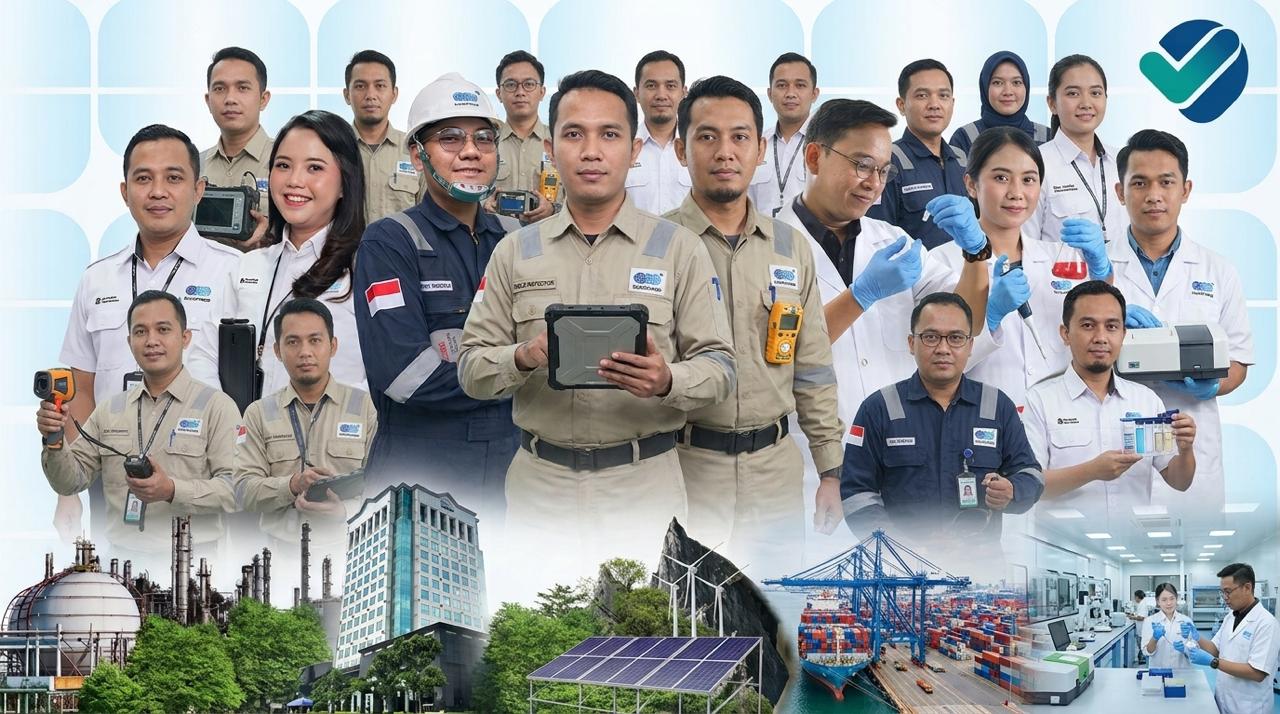
As Indonesia’s leading Testing, Inspection, Certification, and Consulting (TICC) company, SUCOFINDO provides integrated services that help industries improve product quality, ensure regulatory compliance, and enhance competitiveness in domestic and international markets.
Laboratory Testing
SUCOFINDO offers comprehensive laboratory testing services covering:
- Microbiological contaminants
- Heavy metals
- Pesticide residues
- Nutritional analysis
- Chemical and physical parameters
- Other food safety tests in accordance with national and international standards
1. Inspection and Verification
Inspection and verification services help ensure that raw materials, manufacturing processes, production facilities, and supply chains comply with applicable quality and safety requirements.
2. Certification
SUCOFINDO provides certification services for management systems and products to help companies demonstrate compliance with regulatory and industry standards while improving customer confidence.
3. Consulting Services
SUCOFINDO also offers technical consulting to assist companies in strengthening quality management systems, regulatory compliance, process optimization, and export readiness.
Supporting Indonesian Industries in the Global Marketplace
Food safety and food-contact material compliance have become increasingly important in international trade. Understanding EFSA’s scientific approach and implementing internationally recognized production standards can help manufacturers strengthen market confidence and expand export opportunities.
Through its expertise in Testing, Inspection, Certification, and Consulting (TICC), PT SUCOFINDO (PERSERO) is committed to supporting Indonesian industries in ensuring the quality, safety, and compliance of their production processes with international requirements. This commitment contributes to improving the global competitiveness of Indonesian products—including food-grade recycled PET (rPET)—while promoting food safety, sustainability, and responsible industrial development.