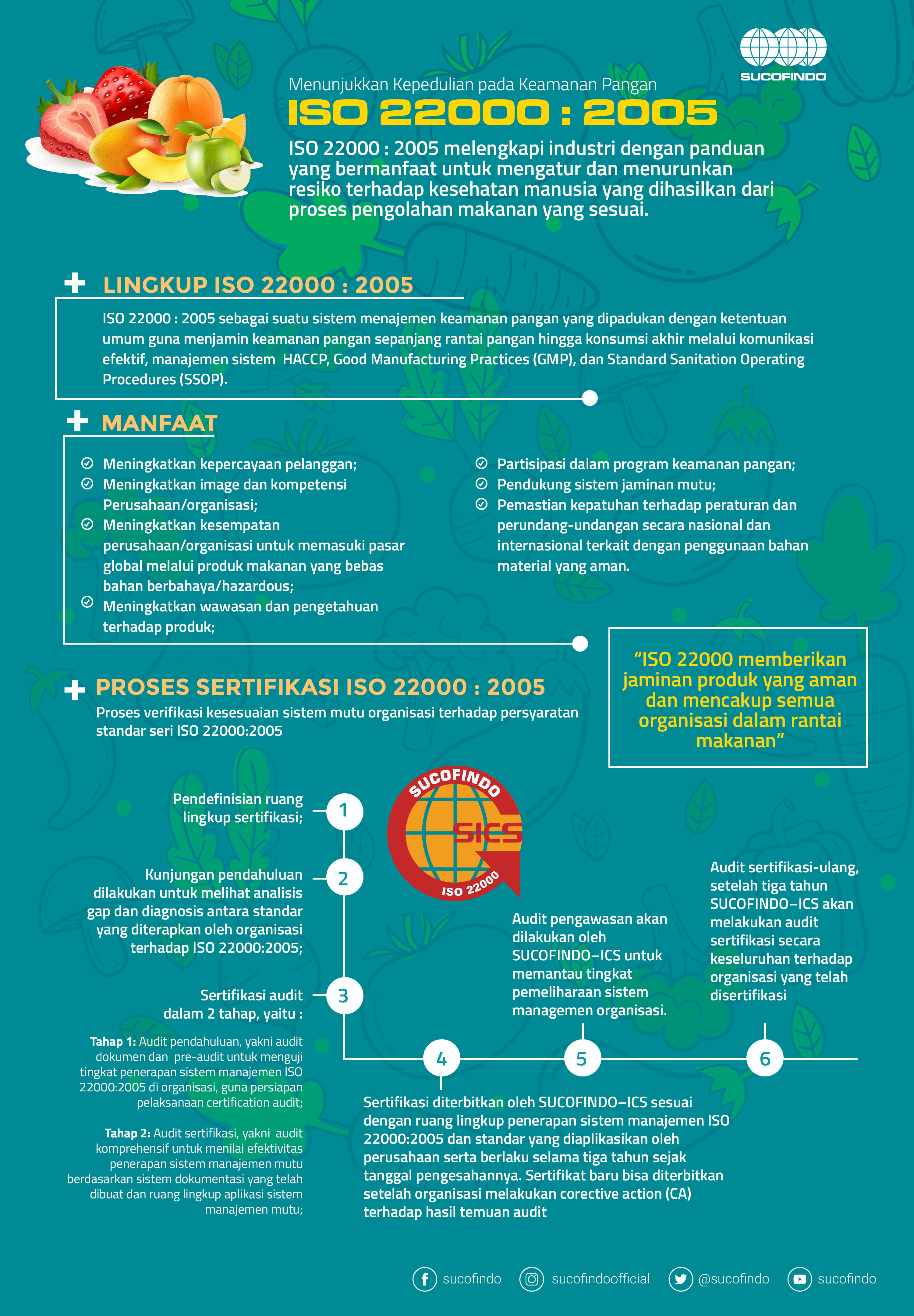

At SUCOFINDO, we assess food safety management systems in Indonesia against ISO 22000:2018. Our service examines how organizations in the food chain identify and control food safety hazards, communicate relevant information, and manage processes that influence food safety.
ISO 22000 applies to food-chain activities rather than construction or building certification. It may be relevant when a building or infrastructure project includes an eligible food production, storage, packing, transport, or catering operation. The assessment therefore focuses on the food-related operator and the processes within its defined certification scope, not the building asset itself.
The following details the scope of PT SUCOFINDO’s ISO 22000:
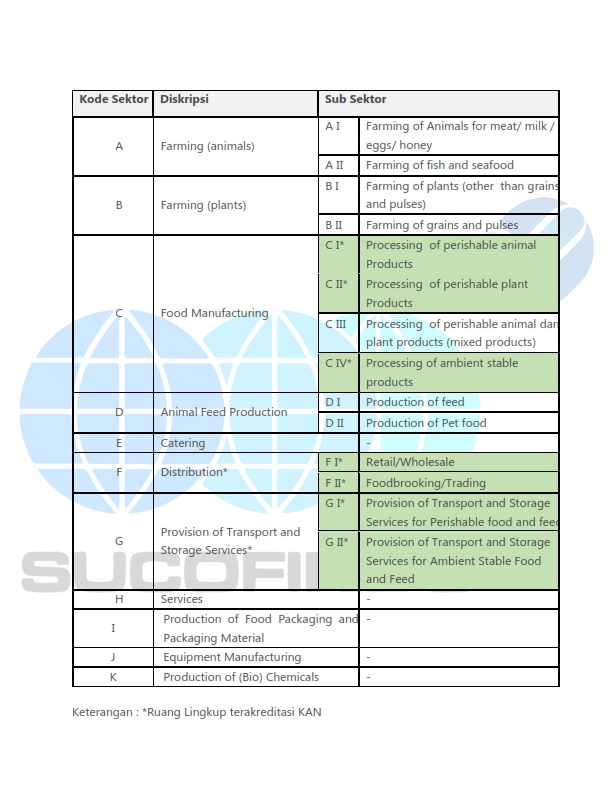
PT SUCOFINDO’s ISO 22000 certification scheme includes the following steps:
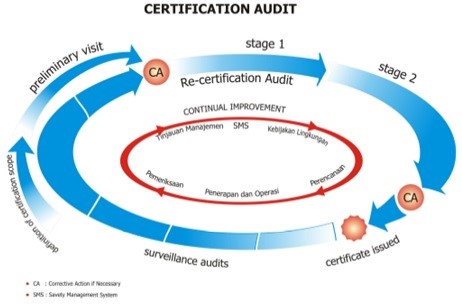
Service Scope
Before the assessment, we review the proposed certification scope and audit arrangements with you. These depend on the operation and the applicable certification scheme. The process may include the following activities:
Scope review: Examining the food-chain activities, facilities, products, and certification boundaries to determine which parts of the operation are included.
Hazard control assessment: Reviewing food safety hazards, control measures, prerequisite programmes, and records relevant to the operation.
Implementation evaluation: Assessing how the food safety management system is applied, monitored, and maintained, including how the organization reviews performance and addresses identified issues.
Certification and follow-up: Evaluating conformity with ISO 22000:2018 and carrying out follow-up activities under the applicable certification scheme. Certification is granted when the required conformity conditions are met.
Supporting Project and Asset Decisions
A building or infrastructure development may accommodate different food-related activities, each with its own handling requirements and food safety risks. A production area may need controls for processing activities, while storage facilities require procedures for receiving, handling, and keeping products under specified conditions and documenting relevant handling checks. Packing and catering operations may also need clear arrangements for personnel responsibilities, product handling, and communication between teams.
In shared facilities, food operators may also need to coordinate access, cleaning schedules, waste handling, and maintenance activities with site management. These arrangements can affect food handling conditions and should be addressed within the operator's food safety procedures.
An ISO 22000 assessment examines how the food-related operation manages these activities and the hazards associated with them. It does not certify the building, construction works, or infrastructure asset. Within the certified operation, a defined food safety management system can help your teams:
Assign responsibilities: Clarify who oversees food safety activities, maintains records, and follows established procedures.
Control hazards: Apply relevant measures to prevent, eliminate, or reduce food safety hazards to acceptable levels.
Coordinate across the food chain: Share information about products, handling requirements, and food safety issues with the parties involved in the operation.
Discuss Your Requirements
For organizations operating food-related facilities, understanding the certification requirements is an important part of preparing for assessment. SUCOFINDO can discuss the applicable arrangements with you and help clarify the information needed for the next step.
Contact SUCOFINDO to discuss your ISO 22000 food safety management system certification requirements in Indonesia. You can also explore Our Other Services and Business Sectors to learn about our services across industries.