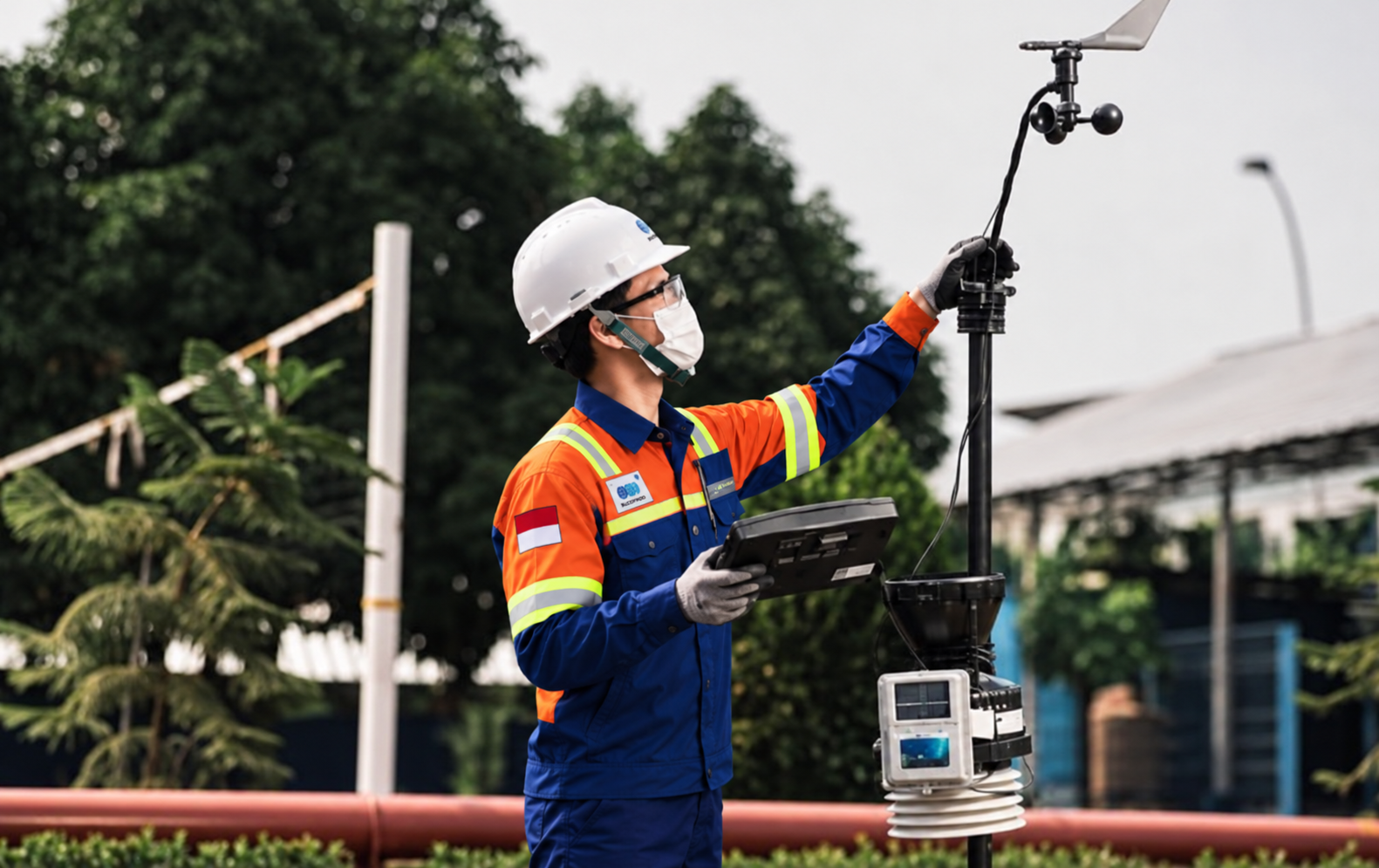
At SUCOFINDO, we provide sampling, analysis, and monitoring of ambient air, indoor air, noise, and emissions in Indonesia within an agreed assessment scope. Our service produces environmental data about conditions at selected monitoring points, giving you a basis for reviewing site conditions and determining appropriate follow-up actions.
The purpose and setting of an assessment influence what needs to be measured. Construction activity, building occupancy, and equipment operation can create different environmental concerns. We establish the site conditions, relevant activities, emission sources, and assessment objectives with you before planning the monitoring programme. This helps distinguish routine monitoring from assessments prompted by an activity, site concern, or change in operating conditions.
Service Scope
We agree on the monitoring locations, parameters, methods, frequency, operating conditions, and assessment criteria before work begins. Ambient air, indoor air, noise, and source emissions require distinct assessment arrangements, so the programme is planned around the specific conditions being investigated. Depending on your project, our service may include:
Programme design: Selecting monitoring locations and parameters based on the assessment purpose, site conditions, and relevant requirements.
Measurement and analysis: Conducting air sampling and analysis, noise measurements, or emissions testing within the agreed programme.
Monitoring and reporting: Repeating measurements at agreed intervals where required and documenting results for environmental review and follow-up decisions.
Supporting Project and Asset Decisions
Environmental conditions can affect construction activities, building use, and the areas surrounding a project. During construction, dust and noise measurements can help project teams review the effects of work taking place at selected locations. For occupied buildings, indoor air assessment provides information about conditions within the spaces being evaluated. Emissions testing can also provide data about selected sources under the operating conditions recorded during the assessment.
The results need to be interpreted in relation to where and when measurements were taken, the activities underway, and the criteria applied. A monitoring result describes the parameters and conditions included in the assessment; it is not a blanket guarantee of air quality, regulatory compliance, or workplace safety. Keeping records of monitoring points, operating conditions, and assessment criteria helps your teams to:
Investigate changes: Compare measurements from suitable locations and periods to identify variations that may require attention.
Review environmental controls: Consider measured results when evaluating dust suppression, ventilation, noise management, or emissions controls included in the assessment.
Determine follow-up needs: Identify whether additional monitoring, technical review, or other site measures should be considered.
Discuss Your Requirements
The right assessment begins with a clear understanding of the conditions you need to evaluate. Share your site location in Indonesia, project stage, relevant activities, emission sources, areas of concern, and intended monitoring objectives with our team. Operating schedules, proposed monitoring locations, and applicable permit conditions or assessment criteria can also help define the required scope.
Contact SUCOFINDO to discuss your air quality, noise, and emissions testing requirements in Indonesia. You can also explore Our Other Services and Business Sectors to learn about our services across industries.