
At SUCOFINDO, we assess quality management systems in Indonesia against the applicable requirements of ISO 9001. Our audits examine how your organization establishes quality objectives, manages processes, monitors results, and addresses nonconformities.
For agricultural and forestry businesses, quality management depends on procedures across sourcing, production, processing, storage, and delivery. Certification provides independent evidence that the quality management system has been assessed against the selected standard within the approved scope.
Service Scope
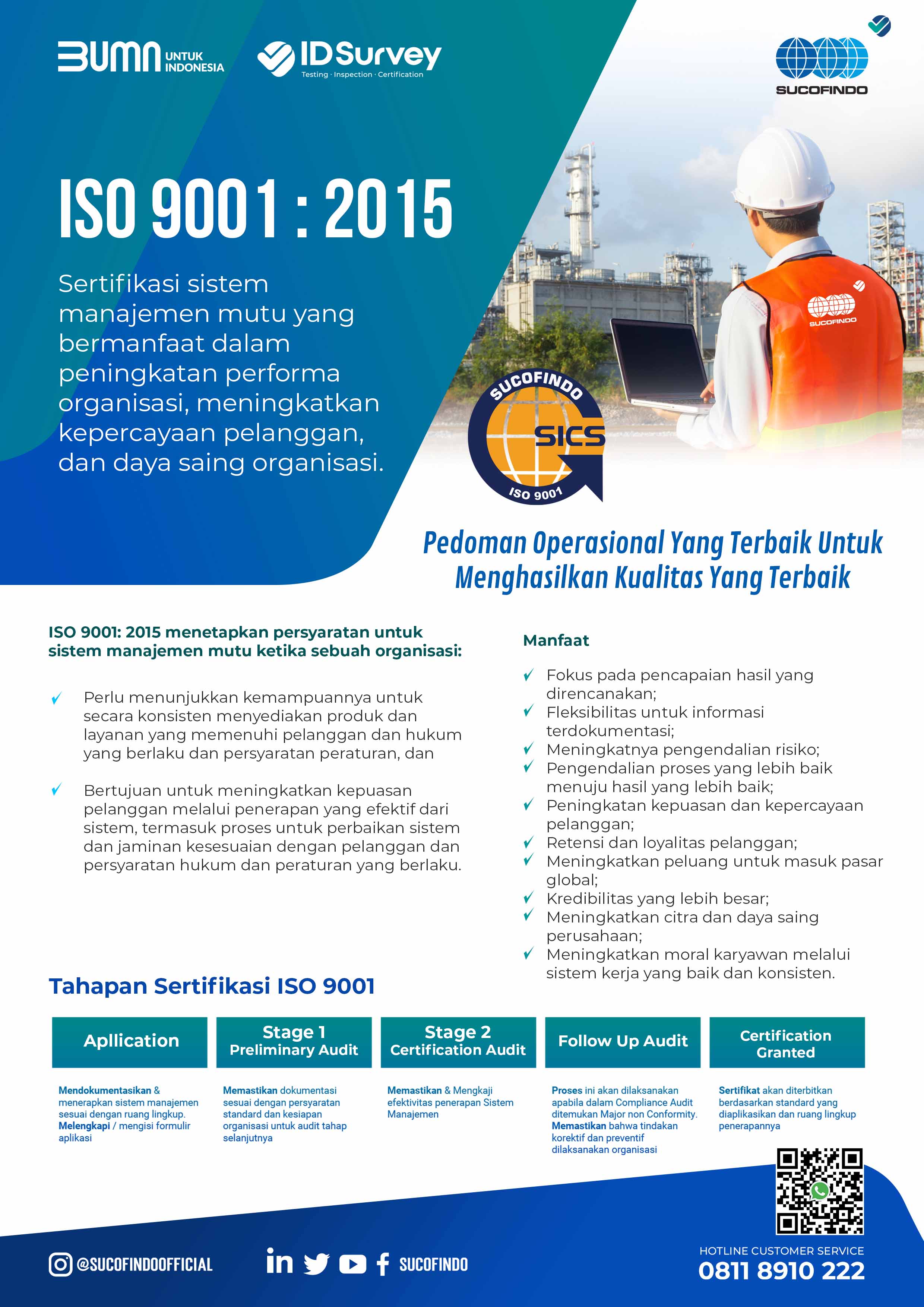
Our certification programme follows a sequence. The applicable standard, certification scheme, and audit programme determine the assessment arrangements, which may include:
Scope definition: Identifying the organization, sites, and activities covered by the certification.
Preliminary visit: Reviewing arrangements to identify gaps and understand the organization's readiness for assessment.
Stage 1 audit: Reviewing documented information and evaluating whether the quality management system is established and ready for the Stage 2 audit.
Stage 2 audit: Examining implementation and effectiveness across the activities included in the approved scope.
Certification and maintenance: Issuing a certificate when conformity is demonstrated and required corrective actions are completed. Surveillance audits monitor continued conformity, while recertification takes place at the end of the certification cycle.
Supporting Agricultural and Forestry Operations
Agricultural and forestry organizations manage quality across activities such as raw material sourcing, supplier coordination, harvesting, processing, storage, and distribution. Requirements vary by commodity, production method, customer agreement, and handling stage. A quality management system establishes how these requirements are translated into procedures, assigned responsibilities, monitored, and reviewed.
A producer may need checks when receiving agricultural inputs, while a processor may monitor production steps and maintain records for each batch. Businesses handling stored commodities may also establish procedures for monitoring handling conditions, identifying nonconforming materials, and communicating quality issues to suppliers or customers. The controls depend on your organization's activities and the requirements it has committed to meet. These records can support reviews of supplier performance, process consistency, and handling practices when quality concerns arise during routine operations.
ISO 9001 certification assesses the management system, not individual products. It does not guarantee that every product will meet every customer specification. Within the certified scope, a structured system can help your teams:
Manage customer requirements: Establish processes and responsibilities for meeting agreed specifications.
Address recurring issues: Use records, audit findings, and corrective actions to identify causes and prevent repeated problems.
Maintain improvements: Review performance and follow up on actions as operations change.
Discuss Your Requirements
A certification programme should reflect the activities and locations your organization intends to include. SUCOFINDO's certification team can guide you through the audit stages and information needed to establish the programme. Prepare an outline of your operations in Indonesia, quality objectives, procedures, and sites. These details will help the team understand your arrangements and the certification scope you are considering.
Take the next step toward independent assessment of your quality management system. Contact SUCOFINDO through WhatsApp to begin your ISO 9001 certification discussion for agricultural or forestry operations. You can also explore Our Other Services and Business Sectors for our services across industries.